



Your Trees May Look Dry...But Bugs Could Be the Real Problem

Alice Carmody
After moving to Colorado in 1993 and working at a title company, I pursued a career in real estate...
After moving to Colorado in 1993 and working at a title company, I pursued a career in real estate...
Colorado tree bugs are thriving this summer across Jefferson County’s foothills. After several years of drought and below-average moisture, many pines, spruces, ash trees, and aspens are under stress and less able to defend themselves against insect attacks.
What begins as a minor pest problem can quickly escalate as weakened trees become more vulnerable to additional insects, diseases, and environmental stress. Trees weakened or killed by insect activity can also become wildfire fuel, increasing risk throughout the community.
If you’ve noticed bark damage, discolored needles, or dead branches on your trees, prompt action can prevent cascading infestations and protect your property.
Key Takeaways
- Mountain pine beetles are at outbreak levels; immediate assessment can save high-value trees.
- Emerald ash borer has reached Golden and Wheat Ridge—treatment is most effective April–June, with options through October.
- Drought-stressed trees are more vulnerable to insect infestations, making early detection critical to preventing further damage and tree loss.
- A professional assessment can identify the pest involved and determine the most effective treatment strategy and timing.
Why Pest Pressure Is Higher This Year in Colorado’s Foothills
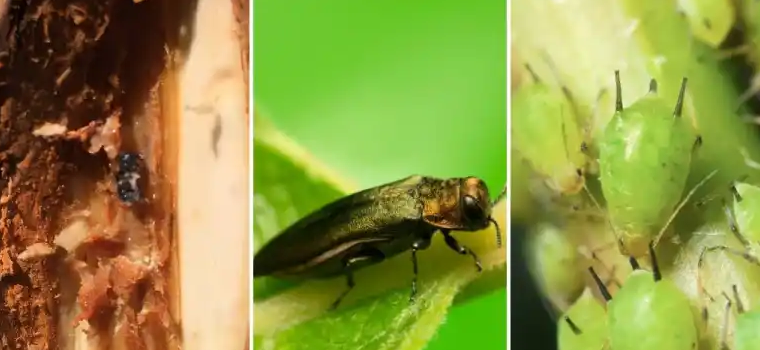
Colorado’s foothills face an unprecedented pest season following several years of severe dry conditions. The Colorado State Forest Service 2025 Forest Health Report documents dramatic pest population surges, particularly mountain pine beetle and emerald ash borer now detected in 20+ Front Range cities, including Lakewood and Wheat Ridge.
The communities most affected—Indian Hills, Kittredge, Pine, Evergreen, and Conifer—face the greatest pressure from bark beetles and defoliators, especially at higher elevations with dense conifer stands.
What Tree Pests Are Most Active in Colorado’s Foothills This Summer?
Several tree pests are active across Colorado’s foothills this summer, but the risk depends largely on the trees growing on your property. Pines, spruces, ash trees, and aspens each face different insect pressures, and recognizing the most common threats is the first step in protecting tree health.
What Pests Are Threatening Pine Trees?
Pine trees in Colorado’s foothills face pressure from several pests, but bark beetles remain the greatest concern. Mountain pine beetles, ips beetles, and spider mites can all cause decline, particularly when trees are stressed by drought, root damage, or other environmental factors.
Mountain Pine Beetle
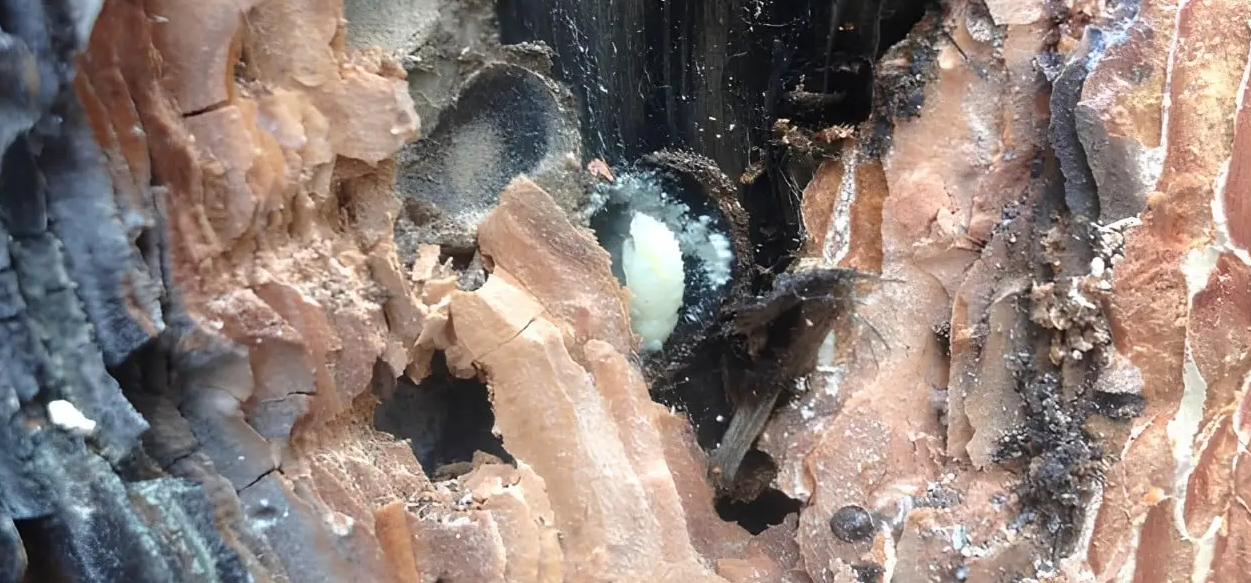
Mountain pine beetles attack the inner bark of pine trees, disrupting the flow of water and nutrients. They are most likely to infest drought-stressed or otherwise weakened trees but can overwhelm healthy pines during outbreak periods.
What to Look For:
- Pitch tubes on the trunk
- Reddish-brown boring dust in bark crevices
- Fading or red needles in the crown
- Progressive branch dieback
Because mountain pine beetles spend much of their life cycle beneath the bark, infestations often go unnoticed until damage is well underway. If you suspect mountain pine beetle activity, early evaluation is important. An arborist can determine whether treatment is still a viable option and recommend next steps based on the tree’s condition.
Ips Beetles
Ips beetles tunnel beneath the bark of spruce and pine trees, causing canopy dieback and sometimes tree death. They primarily attack drought-stressed or damaged trees and are especially active after dry summers or storm damage.
What to Look For:
- Characteristic “Y” or “H” shaped galleries under bark
- Reddish-brown boring dust at the base
- Bark discoloration in clusters
Unlike mountain pine beetles, Ips beetles target already-weakened trees, making dormant-season treatment most effective. An arborist can help determine whether treatment or removal is the best option.
Spider Mites
Spider mites are tiny, sap-sucking arachnids (not insects!) and are known to gather on the underside of leaves. Females can lay up to 100 eggs at a time, as many as 30 times per year. Most spider mite activity occurs during the warmer months, though some species are also active in the cooler months of spring and fall.
What to Look For:
- Fine stippling (tiny yellow dots on needles)
- Bronzing of needle edges
- Premature needle drop
- Visible webbing on branch tips in heavy infestations
Water management is the first defense against spider mites because adequate soil moisture suppresses populations naturally. If your spruce shows stippling despite adequate watering, our spider mite treatment strategies can determine whether additional intervention is needed.

Spruce forests can experience widespread damage when bark beetle populations increase during periods of drought or other environmental stress. Large infestations may spread quickly through dense stands, killing groups of trees and altering entire forest ecosystems.
What Pests Are Affecting My Spruce Trees?
Spruce trees face several insect threats during the summer months. While spider mites and ips beetles can also affect spruces—particularly trees already stressed by drought—the most distinctive spruce pests in Colorado’s foothills are western spruce budworm and Cooley spruce gall adelgid.
Western Spruce Budworm
Western spruce budworm is a defoliating caterpillar that feeds on the needles of spruce and fir trees. While a single season of feeding rarely kills a healthy tree, repeated defoliation reduces energy reserves and can leave trees more vulnerable to drought, disease, and secondary bark beetle attacks.
What to Look For:
- Reddish-brown or missing needles on branch tips
- Thinning foliage in the upper or outer canopy
- Partially eaten needles and new growth
- Caterpillars or webbing on affected branches during spring and summer
If defoliation is becoming more widespread or recurring year after year, a professional evaluation can help determine whether treatment is warranted.
Cooley Spruce Gall Adelgid
Cooley spruce gall adelgid is a small sap-feeding insect that causes abnormal growths, known as galls, on spruce branch tips. While light infestations are primarily a cosmetic issue, repeated attacks can reduce vigor and affect the tree’s overall appearance.
What to Look For:
- Cone-shaped green or purple galls at branch tips
- Distorted or stunted new growth
- Browning needles around affected shoots
- Premature gall opening later in the season, leaving a dry, brown appearance
Because galls form in response to feeding activity, treatment is most effective before they fully develop. If you’re noticing widespread gall formation throughout the canopy, an arborist can help determine whether management is necessary.
What Pests Are Affecting My Ash Trees?
For ash trees, one pest overshadows all others. Emerald ash borer continues to expand across the Front Range, and untreated infestations are typically fatal. Recognizing the early warning signs can help homeowners make treatment decisions before significant decline occurs.
Emerald Ash Borer
Emerald ash borer remains the most significant threat to ash trees throughout the Front Range. It is confirmed in 20+ cities, including Lakewood, Wheat Ridge, and Golden. The larvae feed beneath the bark, disrupting the tree’s ability to transport water and nutrients. Once symptoms become obvious, the infestation is often well established.
What to Look For:
- Thinning canopy
- Dead upper branches
- Epicormic sprouts on the trunk
- D-shaped exit holes
- Increased woodpecker activity
What Pests Are Affecting My Aspen Trees?
Aspen trees face a different pest lineup than pines and spruces. Unlike bark beetles, aspen pests tend toward defoliators and sap-feeders.
Aphids
Aphids produce honeydew—sticky waste that drips onto decks and cars. While wasps are attracted to honeydew, the real problem is the aphid colonies underneath. Multiple years of heavy aphid pressure weakens aspens and opens doors to other pests.
What to Look For:
- Sticky honeydew dripping on decks, cars, outdoor furniture
- Sooty mold where honeydew accumulates
- Visible aphid colonies on branches and leaves
Poplar Borer
Poplar borer larvae tunnel into aspen trunks, creating galleries that weaken structural integrity. Early detection through annual inspection is critical to prevent tree failure.
What to Look For:
- Small exit holes in aspen bark (size of a pencil point or smaller)
- Weakening of trunk structure
- Galleries visible if bark is stripped
Western Tent Caterpillars
Western tent caterpillars create visible silken tents in aspen crotches (May–June). They are currently localized and not yet at outbreak levels in foothills.
What to Look For:
- Visible silken tents in aspen crotches
- Defoliation on affected branches
Scale Insects
Scale insects look like tiny bumps on aspen bark and needles and are easily overlooked. They also produce honeydew, signaling significant pest pressure.
What to Look For:
- Tiny bumps on aspen bark and needles (look like part of the bark)
- Honeydew accumulation below infested branches
- Sooty mold
Professional assessment determines whether treatment or removal is needed.
What Happens if a Tree Pest Infestation Goes Untreated?
Untreated tree pest infestations can lead to progressive decline, structural failure, or tree death. In many cases, the longer an infestation is allowed to develop, the fewer treatment options remain.
A single stressed tree triggers a chain reaction. Bark beetles move in, galleries weaken the crown, budworm exploits the damaged canopy, secondary pests (aphids and scale) proliferate, and they produce honeydew that attracts wasps. The real damage comes from aphids and scale, not the wasps.
Early intervention works because treating before bark beetle galleries fully girdle the trunk can save the tree. Removing a heavily infested tree stops secondary pests from spreading to neighbors. Water management and nutrients help trees mount natural defenses.
How Do You Know If Your Trees Need Professional Treatment?
Professional treatment is usually warranted when the infestation involves large trees, multiple pests, significant canopy decline, or insects that can kill a tree from the inside out, such as bark beetles.
While homeowners can sometimes manage minor infestations on small ornamental trees and shrubs, many tree pests require specialized equipment, precise treatment timing, and an accurate diagnosis. Because different pests can produce similar symptoms, misidentifying the problem often leads to ineffective treatments and continued tree decline.
If you’re seeing widespread needle discoloration, thinning foliage, branch dieback, repeated defoliation, sawdust on the trunk, or signs of pest activity on multiple trees, a professional plant health care assessment is the best place to start. An arborist can identify the pest, evaluate the extent of the damage, and recommend whether treatment, monitoring, or removal is the most appropriate next step.
What LAM’s Plant Health Care Assessment Covers
A professional plant health care assessment looks beyond the visible symptoms to identify the underlying causes of tree decline and determine the most effective course of action. During the assessment, our team evaluates:
- Tree Health and Pest Activity: A tree-by-tree inspection for signs of mountain pine beetle, emerald ash borer, western spruce budworm, spider mites, scale insects, aphids, and other common foothills pests.
- Soil and Site Conditions: Evaluation of soil moisture, drought stress, root zone conditions, and other environmental factors affecting tree health.
- Treatment Recommendations: A customized plan outlining recommended treatments, application timing, expected outcomes, and associated costs.
- Preventive Care Opportunities: Identification of trees that may benefit from proactive treatments before pest populations reach damaging levels.
- Ongoing Monitoring: Follow-up evaluations to monitor tree response, identify secondary pest issues, and adjust treatment strategies as conditions change.
Your Trees May Look Dry...But Bugs Could Be the Real Problem
A new LAM Tree article highlights the destructive tree pests most active in Colorado’s foothills this summer.
Selling Your Home?
Get your home's value - our custom reports include accurate and up to date information.