

Think Feeding Wildlife Helps? In Colorado, It Can Actually Be Illegal

Carrie Hurich
Real estate has never just been about houses for me—it’s about people, transitions, and the moments that matter most...
Real estate has never just been about houses for me—it’s about people, transitions, and the moments that matter most...
Feeding Wildlife is Illegal
Intentional or inadvertent feeding is the major cause of many wildlife problems. Under Colorado law, intentionally feeding deer, elk, pronghorn, mountain goats, bighorn sheep, mountain lions and bears is illegal. This law protects both animals and people: Feeding wildlife is more harmful than helpful.

Trash or Compost Pumpkins
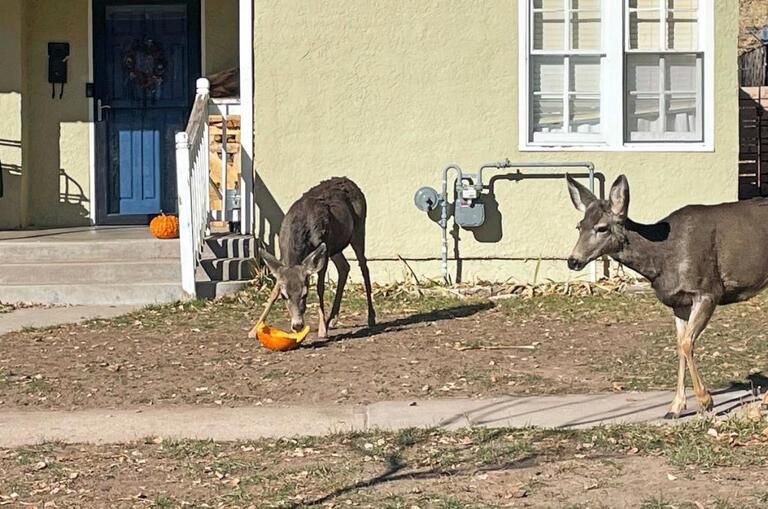
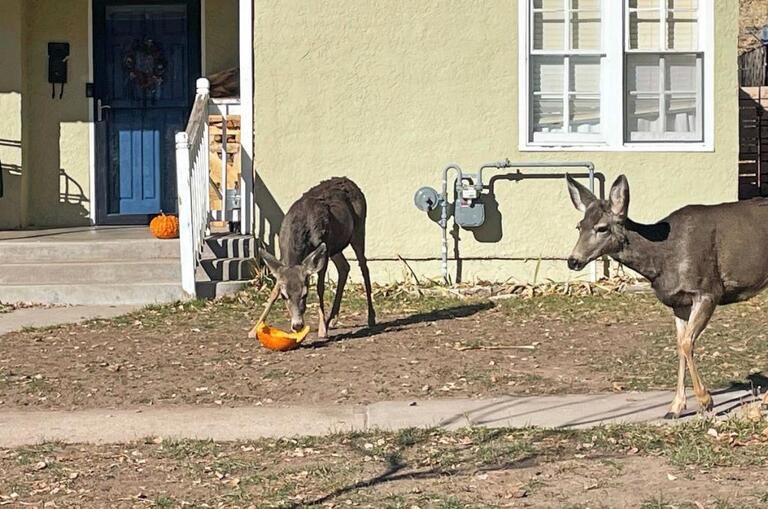
Leaving pumpkins out for wildlife might seem harmless, but it can lead to unintended consequences and put humans and animals at risk.
- Feeding wildlife like deer in your yard can attract mountain lions to residential areas, or uncleaned birdfeeders may attract bears.
- Bears are attracted to pumpkins as they look to pile on calories during the last days before denning season, which can lead to unnecessary human-bear conflicts.
- Animals such as elk, moose and deer with calves and fawns can become aggressive to defend their young.
- Artificial feeding disrupts grazing behavior and prompts deer to crowd together in small areas where they are more likely to be chased by dogs, hit by cars and spread disease.
- Diseases can spread among wildlife, livestock, domestic animals and people.
Leave Necessary Feeding to Colorado Parks and Wildlife
In case of extremely harsh winters, CPW is prepared to provide supplementary, wildlife-formulated feed to big-game ungulates (deer, elk, moose and pronghorn). While the policy is in place for emergencies, these cases are exceptionally rare.
At times, big-game ungulates can crowd around properties, highways and railroads, especially during winter. This is a danger to both animals and people. In rare circumstances, CPW may use “baiting,” using feed to lure animals away from developed areas.
At all other times, animals are better off finding food naturally.
Feeding Wildlife Puts Everyone at Risk
It invites unwanted and potentially dangerous guests
For example, feeding deer in your yard can also attract mountain lions; uncleaned birdfeeders may attract bears.
It can end badly for wildlife
Bears have an excellent sense of smell and a great memory. Feeding a bear, or allowing one to eat your trash, could be a death sentence for it. If a bear, mountain lion or other animal is allowed to use human food sources, it can become less wary and more emboldened around people. It’s more likely to attack pets and people, and when that happens, it needs to be killed to protect human health and safety. Be part of the solution — keep food away from wildlife!
It disrupts normal wildlife behavior
The normal feeding behavior allows big-game animals to spread out as they graze or browse. Artificial feeding disrupts that behavior. It prompts deer, for example, to crowd together in small areas where they are more likely to be chased by dogs and hit by cars.
It causes disease in wildlife
The crowding caused by artificial feeding can also increase stress and spread disease. Salt and mineral blocks, corn, grain and pumpkins all facilitate disease transmission. These diseases take time to incubate; an animal that got sick at an artificial feeding spot may move far away before it starts to show symptoms — this means that those who feed wildlife often don’t see the consequence of their actions. Animals that catch diseases from artificial feeding spots can also go on to affect many other animals.
Diseases can spread from wildlife to livestock, pets and people
Primary concerns are devastating diseases such as brucellosis and tuberculosis — both of which can infect humans — and Highly Pathogenic Avian Influenza (HPAI), which has led to major damage to wild bird populations and the agricultural industry. HPAI can also infect humans.
Feeding Can Cause Fatal Disease
There are two diseases fatal to animals that can easily spread when congregating over feed: acidosis and chronic wasting disease.
Feeding Can Harm Stomachs of Wildlife
What is Acidosis?
Deer and elk eat wild grasses, forbs and shrubs, and have specialized stomachs for getting nutrients out of these tough-to-digest foods. When they eat corn, bird seed, apples, grain or other high-carbohydrate foods, their stomachs produce too much acid, causing a disease known as acidosis. The acid burns the stomach lining, letting bacteria into the blood and causing diarrhea, dehydration, brain damage and hoof problems (laminitis). Many animals die quickly from the acid’s immediate effects; others may live longer but eventually die from liver or brain damage
What to Look For
- Diarrhea
- Animals acting sick or weak
- Long or twisted hooves
- Liver abscesses
Protecting Wildlife from Acidosis
The best way to prevent acidosis in wildlife is to prevent access to high-carbohydrate foods. Many people want to help wildlife by providing food, but unfortunately this practice causes many wildlife deaths each year in Colorado.
Threat To Humans
Acidosis is not a transmissible disease. However, if abscesses are seen in a harvested animal’s liver, it can be a sign that bacteria have entered the blood — do not consume the meat if you see this.
Feeding Birds
Bird feeders can become bear feeders. An easily accessible bird feeder can “teach” bears that it’s safe to search for food in areas where people live — this is not the message we want to send to bears. Bird feeders are only appropriate in the winter months, when bears are hibernating. In the spring and summer months, when bears are active, you can attract birds by using nest boxes or creating a bird garden, with hanging flower pots and a bird bath.
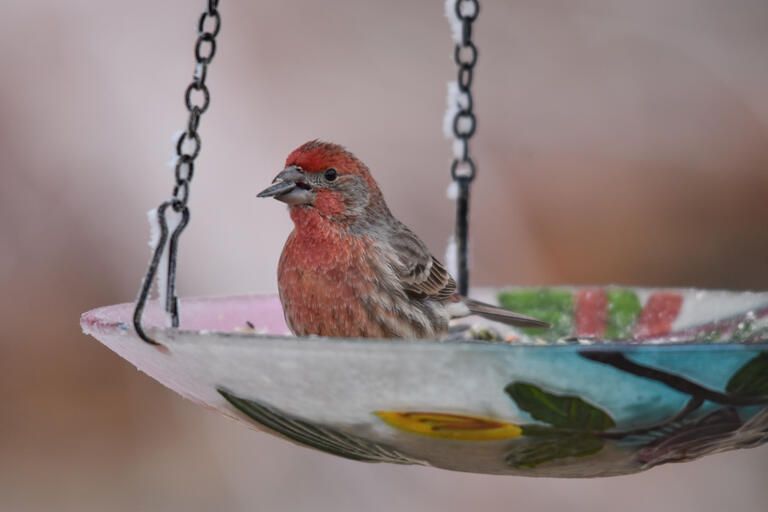
Best Practices for Safe Bird Feeding
✅ Use multiple feeders to avoid crowding.
❌ Do not feed on the ground. Avoid platform feeders that allow birds to defecate on feeding surfaces.
❌ Remove bird feeders in the spring and through the fall to avoid them becoming "bear feeders."
✅ Regularly eliminate feed from the ground.
✅ Clean feeders every two weeks (in the dishwasher or using soapy water, followed by a rinse with 10% bleach solution).
✅ Always keep bird seed dry.
✅ Wear gloves and wash hands after handling feeders.
❌ Never allow pets to play with or consume sick or dead birds.
Diseases at Bird Feeders
Many diseases are spread at bird feeders. These diseases can be controlled and prevented by proper use and regular cleaning of feeders.
Salmonellosis
Feeders can be hotbeds of salmonella, spread through bird feces on the feeders or seeds that fall on the ground. Salmonella bacteria can cause illness in humans and domestic animals.
Trichomoniasis
The trichomonad parasite is spread when infected birds drop feed that cannot be swallowed and other birds eat the contaminated feed. Sick birds cannot swallow feed because of an infection in the throat. Mourning doves are most commonly affected.
Finch Conjunctivitis
Sick birds have swollen, red, watery and/or crusty eyes. Birds may recover from this disease, although severe cases can be fatal. Finches are most commonly affected. Mycoplasma gallisepticum, the bacteria that causes the disease, is spread by contact between birds, usually in crowded groups.
Avian Pox
The avian poxvirus is spread by contact in crowded groups, contact with contaminated surfaces such as bird feeders, by ingesting contaminated food or water, or by insects. Sick birds have wart-like growths on the face, feet and other unfeathered skin. Growths may interfere with the bird’s ability to see, breathe, eat or drink.
Feeding Wildlife
Intentional or inadvertent feeding is the major cause of many wildlife problems....
Selling Your Home?
Get your home's value - our custom reports include accurate and up to date information.